
Why UK B2B Teams Are Switching to Continuous Company Intelligence
Most businesses are doing due diligence backwards.
They check a company after something goes wrong. A payment bounces. A contract dispute starts. A supplier ghosts them. Then they run the search.
That's not due diligence. That's a post-mortem.
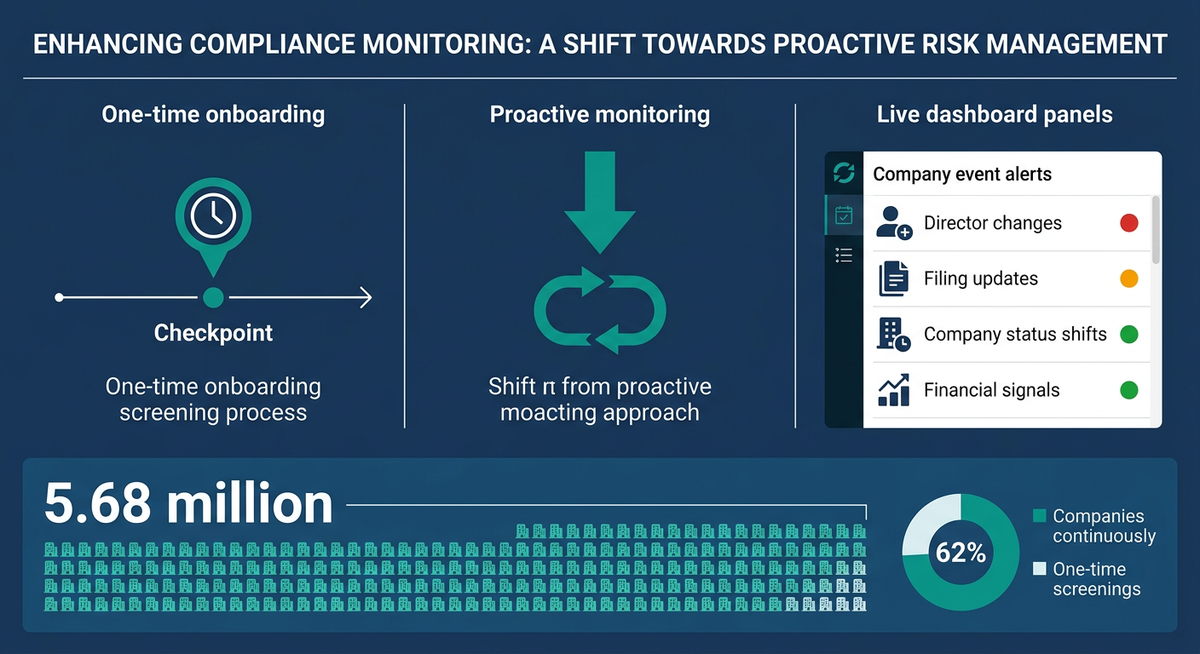
The shift happening right now in UK B2B is quiet but significant. Smart compliance teams aren't just screening new partners at onboarding — they're building continuous intelligence into their workflows. Set it, monitor it, get alerted when something changes. Director resigned suddenly? Company status shifted? New filing looks odd? You know before it becomes your problem.
The data has always been there. Companies House holds filings on 5.68 million UK companies — accounts, appointments, charges, dissolution notices. It's all public. The issue was never access. It was the sheer time cost of actually using it properly.
That's changing fast.
What used to take a trained analyst an hour per company now takes seconds. And the businesses winning on risk management aren't the ones with the biggest compliance teams — they're the ones who've stopped treating company data as a one-time checkbox and started treating it as a live signal.
The irony? The highest-risk partners rarely look suspicious at onboarding. The warning signs appear later. Missed filings. Director changes. Subtle financial deterioration visible in the accounts if you know what to read.
Most people aren't reading them.
The question worth asking your team this week: are you monitoring your existing supplier and client base, or just screening new ones?
Because the risk is rarely where you're looking.
Explore how continuous company intelligence works in practice at https://borsch.ai